iRest Yoga Nidra: The Meditative Heart of Yoga
Integrative Restoration (iRest), or iRest Yoga Nidra is a modern, secular adaptation of the ancient meditative practice of Yoga Nidra. Nidra is a Sanskrit (ancient Indian language) word meaning sleep hence, Yoga Nidra is often called "Yogic Sleep”.
Sep 19, 2026
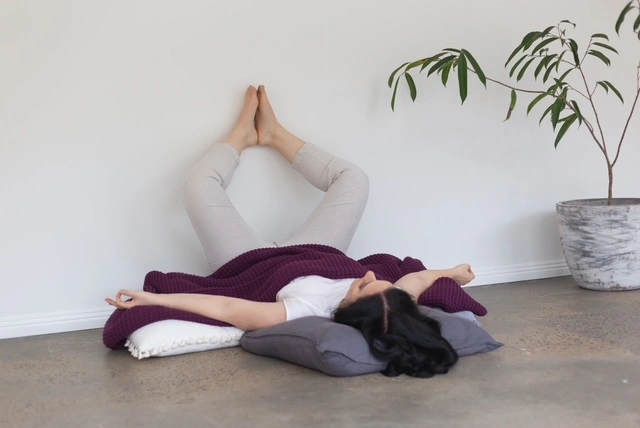
“During Yoga Nidra, you learn to pay close attending to the naturally arising phenomena of your body and mind. You neither invent nor deny anything. Yoga Nidra is not a strategy for self-improvement. Listening and welcoming are your tools, and Yoga Nidra is your process of learning how to listen and welcome all that you are and all that life is - without intention for anything to be other than it is.” - Richard Miller
Integrative Restoration (iRest), or iRest Yoga Nidra is a modern, secular adaptation of the ancient meditative practice of Yoga Nidra. Nidra is a Sanskrit (ancient Indian language) word meaning sleep hence, Yoga Nidra is often called "Yogic Sleep”. iRest was developed by Richard Miller, PhD. Richard is an a yogic scholar, researcher and Clinical Psychologist, who has combined traditional yogic practice with Western psychology and neuroscience. Given Richard's experience as a Clinical Psychologist, iRest is a trauma-sensitive, evidence-based therapeutic practice.
iRest can be considered a form of mindfulness meditation that has been researched and shown to effectively reduce symptoms of PTSD, depression, anxiety, insomnia, persistent pain and substance use issues, whilst increasing awareness, resilience and wellbeing. iRest is not psychotherapy, we do not set goals, talk or even mentally work through our problems. iRest is a process of self-inquiry that focuses on our physical, psychological and spiritual health and wellbeing, in a secular manner that respects a person’s age, culture, religious and philosophical orientation, occupation, physical and mental health.
iRest can be supportive as an addition to psychotherapy as it supports nervous system regulation and deep relaxation. iRest can be practiced in a lying down, seated or standing position, with your eyes open or closed. During an iRest practice you are guided through various depths of self-inquiry. You have the opportunity to practice “being with” and being at ease whilst observing and welcoming physical sensations, breath, feelings, thoughts, images and memories that naturally arise.
iRest is often described in terms of a 10-step guided process. These non-linear steps are as follows:
1. Exploring your Intentions, including what you’d like to get out of the practice.
2. Exploring your Heartfelt Desire, including what gives you a sense of value, purpose and meaning to your life.
3. Exploring your Inner Resource, including what helps you feel safe and secure. You can return to this Inner Resource if you begin to feel unsettled during the practice.
4. Learning Body Sensing, welcoming the physical sensations felt in the body.
5. Learning Breath Sensing, welcoming the more subtle movements of breath and energy.
6. Learning Feeling and Emotion Sensing, welcoming feelings for example, heaviness and its opposite (lightness) and experiencing emotions for example, sadness and its opposite (happiness).
7. Learning Cognition Sensing, welcoming thoughts, beliefs, images, memories and their opposite.
8. Experiencing Joy, realising your innate wellbeing and inherent freedom from suffering.
9. Witnessing Awareness, stepping back into witnessing presence and the interconnectedness of all life.
10. Integration into Life, returning to the waking state and integrating integrative restoration into daily life.
This process may sound intimidating at first, but as you learn how to welcome all that is, you may discover first-hand an experience of profound joy and wellbeing which can develop into an inner reservoir of resilience and self-knowledge that supports your daily life.
I am a certified Level 2 iRest Yoga Nidra Teacher, and have trained directly with Richard Miller. I have experience teaching iRest courses at yoga studios and a public Pain Management service. I have researched and published peer-reviewed journal articles about the experience and clinical outcomes of participating in iRest Yoga Nidra group programs I provide through my public role as a Clinical Psychologist in a Pain Management service, in collaboration with the Deakin University School of Psychology.
Our qualitative research study was the first of its kind to examine the experiences of people with persistent pain engaging in a six-week iRest for Pain group program as part of multidisciplinary pain care. Participants reported they experienced iRest Yoga Nidra as personal and therapeutic, that the practice facilitated deep relaxation and restoration; for some participants trauma reprocessing and integration; improved pain self-management and self-efficacy, as well as dis-identification from persisting pain as personal identity. Additionally, some participants reported motivation and confidence to use iRest instead of medication, to reduce dependence on opioid medications. We concluded that an iRest for Pain group program presented a personally therapeutic and innovative mind-body intervention, which could be offered at various phases from primary to tertiary specialised pain care.
Our quantitative research study of the same six-week iRest for Pain group program, found that participants rated the iRest program as highly acceptable, appropriate and feasible. Participants also demonstrated improvements across all self-reported pain outcomes from pre- to post-program, with effect sizes ranging from moderate to large. Additionally, some participants showed statistically reliable changes in pain outcomes, suggesting iRest for Pain may be an acceptable, appropriate and feasible treatment for people with various persistent pain conditions of longstanding duration and complex health issues. You can read these papers here.
I occasionally offer a public iRest Yoga Nidra classes at Yoga Farm, check my teaching schedule here to find the date of my next class. If you are interested in private individual or private group classes, please contact me to arrange a booking.
With love,
Meg